AI HairScan: How AI-Powered Hair Scanning Is Transforming Hair Loss Diagnosis
AI-powered hair analysis tools now make it possible to assess hair conditions.
Hair loss affects over 80 million people in the United States alone, yet the majority of those experiencing early thinning never receive a timely assessment. Traditionally, diagnosing hair loss required an in-person consultation with a dermatologist or trichologist, a process that can be expensive, intimidating, and difficult to schedule. The result? Millions of people wait until hair loss is highly visible before they take action, missing the critical window when intervention is most effective.
Artificial intelligence is changing that equation. AI-powered hair analysis tools now make it possible to assess hair loss stage, estimate hair density, classify hair type, and deliver personalised product recommendations, all from a single smartphone photo. For clinics, this means faster lead qualification and higher consultation conversion rates. For haircare brands, it means a new way to engage consumers with data-driven personalisation that drives both trust and revenue.
What Is AI HairAnalysis and How Does It Work?
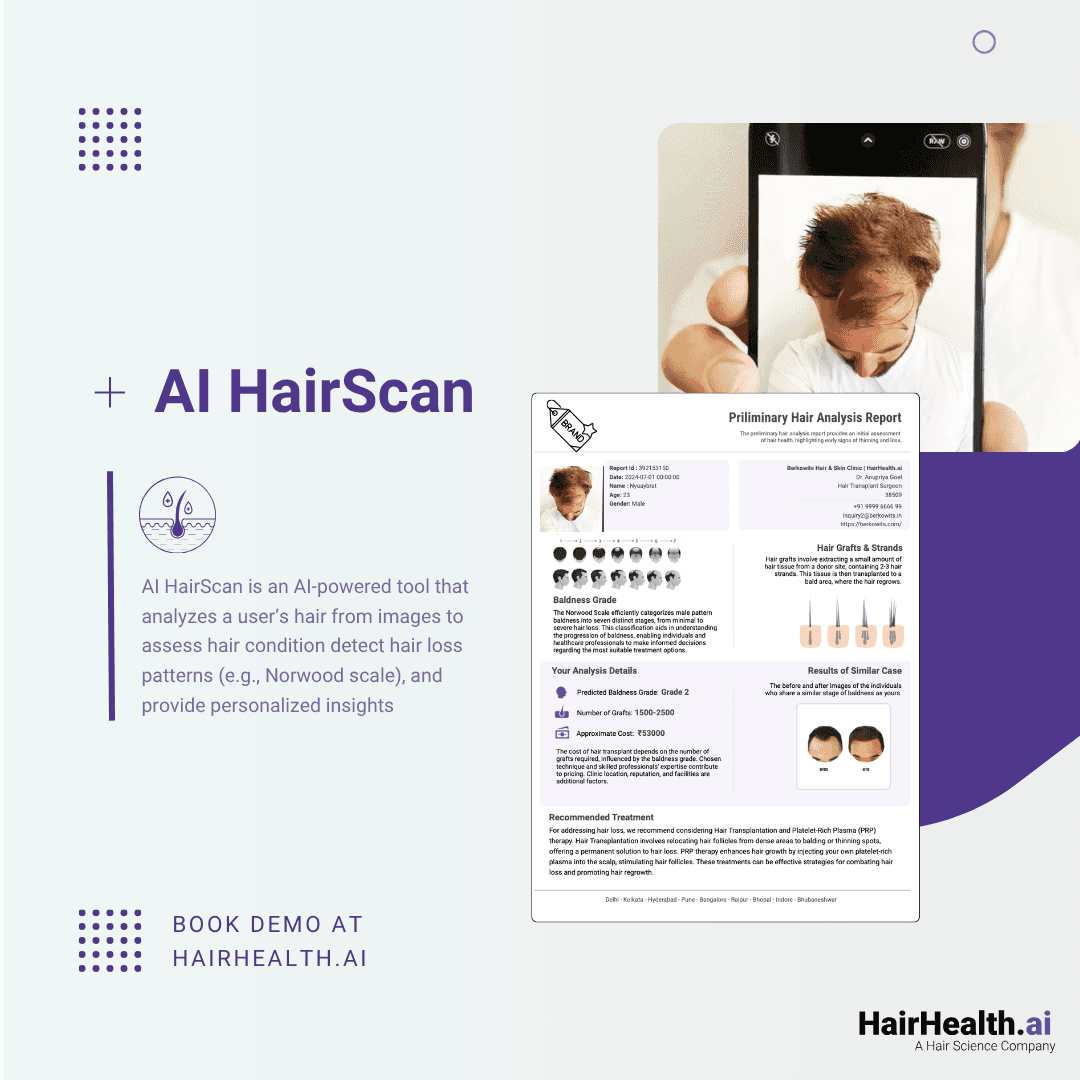
AI HairScan uses computer vision and machine learning models trained on tens of thousands of annotated hair images. When a user uploads a photo, the AI engine processes the image in real time to detect and measure multiple hair characteristics.
A comprehensive AI hair analysis system typically evaluates the following:
Hair loss grade using the Norwood (male) or Ludwig (female) classification scales
Hair density estimation based on visible scalp exposure and hair distribution patterns
Hair thickness indicators that can signal early miniaturisation
Hair type classification (straight, wavy, curly, coily) for product matching
Hair volume and overall hair health scoring
Confidence scoring to indicate the reliability of each measurement
The most advanced systems, such as HairHealth.ai’s AI HairScan, achieve 90–95% accuracy on baldness grade detection by training on over 32,000 images with ongoing monthly data additions of 1,100+ new data points. This level of precision approaches what a trained trichologist can achieve during an in-person consultation, delivered in seconds rather than weeks.
Why Early Hair Loss Detection Matters
A 2025 study analysing over one million users on an AI-powered hair health platform found that 86.4% of users reported visible hair loss, with 43.7% classified as mild, 31.6% as moderate, and 11.2% as severe. The data also revealed that women tend to seek assessment earlier than men, with 46.8% of women presenting with mild thinning compared to 34.1% of men.
This matters because hair loss treatments, whether pharmaceutical (minoxidil, finasteride), topical, or surgical, are significantly more effective when started early. By the time someone notices obvious thinning in the mirror, they may have already lost up to 50% of the hair density in the affected area. AI hair analysis tools bridge this gap by making assessment accessible, instant, and non-intimidating.
AI HairScan for Clinics: Qualifying Leads and Accelerating Consultations
For hair transplant clinics, trichology practices, and dermatology clinics, one of the biggest operational bottlenecks is lead qualification. Many inquiries come from patients who are unsure about their hair loss stage or whether they even need treatment. Manual photo screening by clinical staff is time-consuming and inconsistent.
AI HairScan addresses this by delivering structured diagnostic data before the first consultation:
Hair loss grade detection (Norwood classification) with clear pattern explanations
Estimated graft requirement range for transplant candidates
Estimated treatment cost based on clinic-configured pricing models
Instant PDF or web-based reports branded with the clinic’s identity
The business impact is measurable. Clinics using AI-powered hair analysis tools have reported up to 310% growth in lead generation and a 55% increase in consultation bookings. Patients arrive at consultations better informed, with clearer expectations, which reduces chair time and improves conversion rates.
AI HairScan for Haircare Brands: Personalisation That Converts
For haircare product companies and D2C eCommerce brands, the challenge is different but equally pressing: how do you recommend the right product to the right customer at the right time?
Generic product recommendation engines rely on self-reported data (“what’s your hair concern?”) which is inherently subjective and often inaccurate. AI HairScan replaces this with objective, image-based analysis that identifies:
Actual hair type, density level,Greying and thickness indicators
Thinning severity and hair loss stage
Hair volume and overall condition metrics
Based on these measurements, the system generates personalised product recommendations from the brand’s own catalogue, including shampoos, serums, supplements, and treatment bundles. The entire experience is white-labelled: brands can customise the logo, colours, messaging, report format, and product recommendation logic.
This transforms a passive browsing experience into an interactive “AI consultation” that builds trust and drives conversion. Brands using this approach report higher customer engagement, increased average order value, and reduced product return rates because customers are matched to products that actually suit their hair profile.
How the Technology Compares to Traditional Trichoscopy
It’s worth noting that AI hair analysis does not replace clinical trichoscopy; it complements it. Traditional trichoscopy using a dermatoscope or trichoscope camera provides follicle-level detail (individual follicular unit counts, miniaturisation ratios, vellus-to-terminal hair ratios) that no smartphone-based system can match.
However, AI hair analysis has distinct advantages for first-line screening and consumer engagement:
Zero hardware requirements — works from any smartphone camera
Instant results — reports delivered in seconds, not days
Scalable — can process thousands of assessments daily without staff involvement
Accessible — patients and consumers can self-assess from home
Cost-effective — no clinic visit, no equipment, no waiting list
For clinics that want both, HairHealth.ai offers AI ScalpScan alongside AI HairScan. AI ScalpScan provides trichoscopic-grade analysis (follicle density per cm², hair thickness measurement, donor area evaluation) using trichoscope images, giving clinics a complete diagnostic pipeline from initial screening through to surgical planning.